Editable Wide Ruled Line Paper Graphics for KDP Interiors
As a graphic designer who’s built brand identities for handmade businesses, launched print-on-demand product lines, and crafted social media graphics for Etsy sellers and local boutiques, I recently evaluated Editable Wide Ruled Line Paper 120 Pages for a real client project: a seasonal stationery collection for a small business specializing in mindful journaling tools. My goal wasn’t just to see if it “works”—but whether it elevates the design, supports brand voice, and holds up across multiple commercial applications.
A First Impression That Feels Intentional, Not Generic
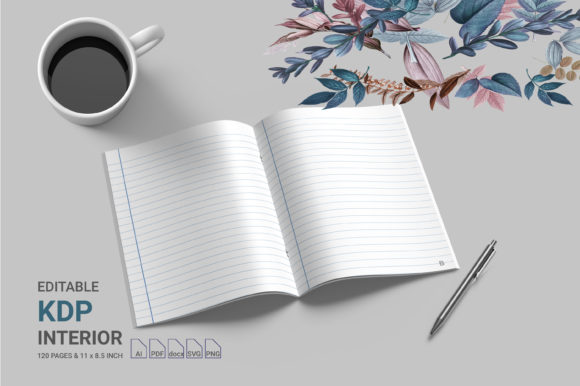
The moment I opened the file, I noticed how deliberately wide-spaced the ruling is—no cramped lines or inconsistent spacing. It doesn’t scream “school notebook”; instead, it leans into a calm, grounded aesthetic—softly tactile, quietly confident. This isn’t decorative clipart; it’s a functional graphic design asset with visual rhythm. For clients building a handmade business or launching a printable design bundle, that subtle warmth translates directly into emotional appeal and perceived authenticity.
Where It Shines: Real-World Design Applications
Editable Wide Ruled Line Paper 120 Pages performs exceptionally well in contexts where structure meets personality:
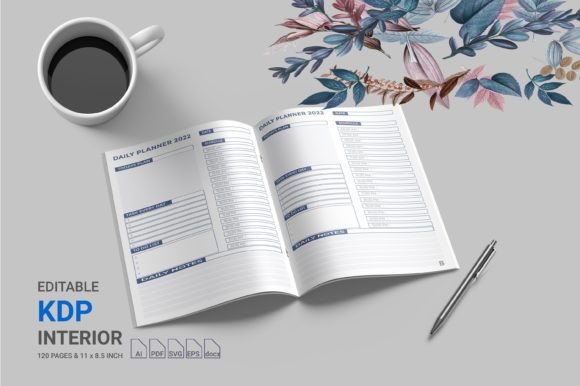
- Product mockups—especially for journals, planners, and digital downloads—where realistic page texture adds instant credibility;
- Packaging design for artisanal notebooks or subscription boxes, used as background texture behind clean typography;
- Social media graphics for Instagram carousels or Pinterest pins showing “how to use” journaling prompts;
- Canva templates and Cricut projects, where editable layers let designers adjust line density, color, or opacity to match brand palettes;
- Editorial design for blogs or newsletters about productivity, wellness, or creative routines—serving as subtle framing elements around quotes or tips;
- Sticker design and sublimation design when isolated sections are extracted for minimalist labels or mug interiors.
It also anchors larger compositions beautifully—think hero banners for online stores, printable wall art collections, or themed campaign visuals (e.g., “Back to Calm” for a Q4 mindfulness launch). Because the lines are clean but not sterile, they support both modern design and organic branding without competing for attention.
Where to Use It Thoughtfully
This asset excels at scale—but caution applies in tighter spaces. In logo design or small-size sticker design, fine details can blur or lose clarity unless optimized. Avoid stacking it over complex backgrounds or low-contrast gradients; the ruling needs breathing room to read clearly. It’s less suited for corporate annual reports or tech SaaS branding, where ultra-minimalist hierarchy demands absolute visual neutrality.
If your client’s brand identity relies on razor-thin typography, monochrome precision, or high-gloss sophistication, test this asset against those standards first. Its strength lies in approachability—not austerity.
How It Shapes Perception and Trust
Readability improves when paired with serif or handwritten fonts—ideal for creative marketplace listings or Etsy product pages where tone matters as much as function. Used consistently across packaging, web design, and marketing visuals, Editable Wide Ruled Line Paper 120 Pages reinforces a cohesive, tactile brand language. That consistency builds visual trust: customers recognize the texture as part of your brand’s “handmade business” signature—even before reading a word.
For print-on-demand sellers, its KDP Interiors readiness means fewer prepress surprises. The files are high-resolution and print-ready, so you’re not chasing bleed adjustments or pixelation in final proofs.
Designer Notes You Can’t Skip
Before dropping this into a client file, run these checks:
- Test it in black and white—does contrast hold up on dark mode or grayscale print?
- Preview at 25%, 100%, and 200% zoom—look for jagged edges or inconsistent line weight.
- Place it on real product mockups (not just flat previews) to assess how light interacts with texture.
- Check file formats: Is the PNG truly transparent? Does the SVG retain vector editability without distortion?
- Compare how it pairs with your client’s font stack—does it harmonize with their script font headlines and sans serif font body copy?
- Confirm commercial licensing—especially for resale items like digital product bundles or design assets sold on Creative Market or Gumroad.
Also verify if the 120-page layout includes consistent margins, bleed-safe zones, and page-number placeholders—critical for any commercial design project heading to KDP or IngramSpark.
Final Verdict: A Quietly Powerful Creative Tool
Editable Wide Ruled Line Paper 120 Pages isn’t flashy—but it’s reliable, versatile, and deeply intentional. For designers supporting small business branding, editorial content creators building printable resources, or marketers developing cohesive campaign visuals, it’s more than filler. It’s a foundational graphic design asset that grounds digital work in physical warmth.
In my stationery client project, it became the unifying thread—from the PDF download cover to the Instagram story template to the printable checklist inside their physical planner kit. It didn’t dominate. It supported. And in professional design, that’s often the highest compliment.
If you're sourcing design bundle components for a creative design workflow—or building assets for your own digital product store—this is one of those quiet wins that pays off across dozens of touchpoints. Just remember: great design isn’t about the loudest element—it’s about the one that makes everything else feel like it belongs.