Japanese Mandala Coloring Page 3: Graphics for Kdp Interiors
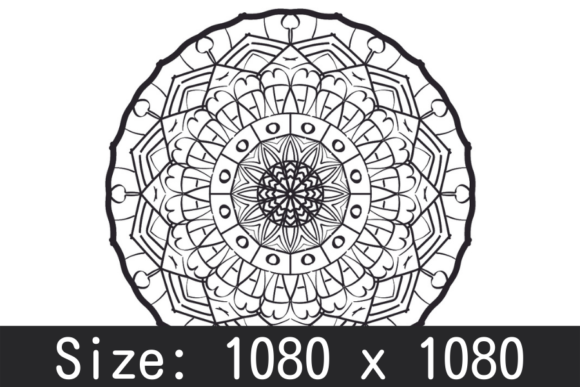
As a graphic designer who’s built brand identities for handmade studios, seasonal Etsy collections, and boutique print-on-demand lines, I opened Japanese Mandala Coloring Page 3 expecting delicate symmetry—and found something more versatile than I anticipated. This isn’t just a coloring sheet; it’s a quiet, confident design asset that lands somewhere between traditional Japanese aesthetics and contemporary printable design sensibility. Its 8.5 × 8.5 inch square format (1080 × 1080 px) feels intentional—not stretched, not cropped—making it instantly usable across digital and physical touchpoints.
A First Impression That Sets the Mood
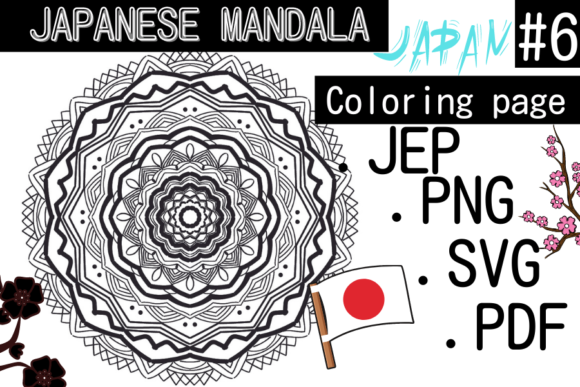
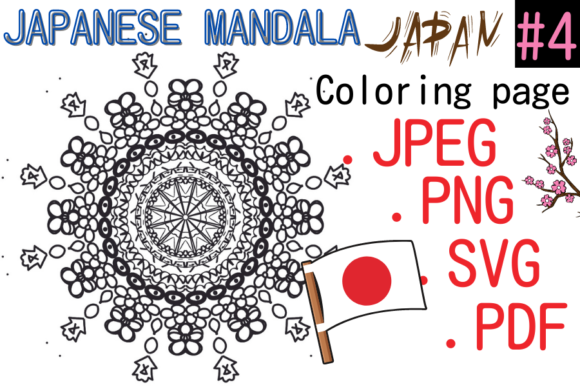
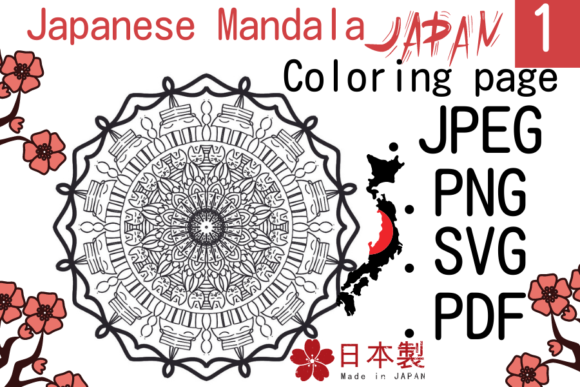
The moment you zoom in, you notice the balance: fine linework with gentle weight variation, concentric layers that breathe without overcrowding, and organic flourishes rooted in nature motifs—chrysanthemum petals, wave rhythms, and subtle bamboo-like stems. It doesn’t shout “Zen” or “spiritual”—it invites calm through precision. For a client launching a slow-living subscription box or a ceramicist releasing a spring-themed product line, this mandala reads as thoughtful, handcrafted, and quietly luxurious. It supports storytelling without competing for attention.
Where It Shines in Real Client Projects
- Printable wall art & digital downloads: Works flawlessly as hero graphics for Etsy listings, Canva templates, or Pinterest-optimized blog visuals—especially when paired with soft serif or muted sans-serif typography.
- Packaging design: Scales beautifully onto kraft paper labels, sticker sheets, or inner packaging liners for small-batch skincare or tea brands. The SVG and PNG files allow precise cropping for circular jar seals or corner accents.
- Social media graphics: As an Instagram post background or Reels overlay, it adds texture without sacrificing readability—particularly effective behind short affirmations or product launch announcements.
- Cricut & sublimation projects: The clean vector paths in the SVG file hold up under heat transfer on mugs, totes, and pillowcases. No pixelation, no jagged edges—even at 12-inch cuts.
- Editorial & web design: Used as a decorative divider in digital lookbooks or as a subtle watermark in client newsletters, it reinforces brand warmth without distracting from core content.
Smart Applications Beyond Coloring
This isn’t limited to coloring books. In one recent project for a Kyoto-inspired candle brand, we repurposed Japanese Mandala Coloring Page 3 as a laser-etched pattern on wooden gift boxes—converted from SVG to DXF, then scaled to fit curved surfaces. In another, we layered its PNG version (with transparent background) over hand-drawn botanical illustrations for a limited-edition greeting card series. Its visual rhythm complements script fonts and handwritten elements but also grounds bold display type—ideal for invitations or event posters tied to wellness retreats or cultural festivals.
Where Caution Is Needed
While elegant, Japanese Mandala Coloring Page 3 isn’t universally flexible. Avoid using it in minimalist corporate branding—its detail can overwhelm clean layouts. It loses definition below 2 inches wide, so skip tiny app icons or favicon use. On busy backgrounds (e.g., textured photos or gradient overlays), contrast suffers unless you add a subtle drop shadow or light stroke. And while lovely in black-and-white print, test grayscale output first: some interior linework may soften on low-DPI printers or newsprint stock.
Designer Notes You Can’t Skip
- Test contrast early: Preview on both light and dark mockups—especially for social media banners where background color shifts per platform.
- Check transparency: The PNG includes alpha channel support, but verify edges are crisp—not feathered—before applying to sticker designs or cut files.
- Verify vector integrity: Open the SVG in Illustrator or Affinity Designer. Confirm all strokes are editable, no embedded rasters, and anchor points are smooth.
- Match typography deliberately: It pairs best with soft serifs (e.g., Playfair Display), warm sans-serifs (e.g., Poppins Light), or restrained scripts—not tight geometric fonts or ultra-bold displays.
- Confirm commercial license scope: Since it’s listed for Amazon KDP, double-check usage rights for your specific client context—especially for sublimation, merch licensing, or white-label product mockups.
- Print-test before bulk production: Run a single-page PDF proof on your target paper stock. Lineweight clarity and ink bleed vary significantly across printer models and coated/uncoated papers.
Why It Fits Modern Small Business Branding
In today’s crowded creative marketplace, authenticity is currency—and Japanese Mandala Coloring Page 3 delivers visual sincerity without cliché. It avoids generic “Asian-inspired” tropes by honoring proportion, restraint, and repetition in a way that feels researched, not appropriated. For handmade businesses building emotional resonance—think apothecaries, journal publishers, yoga studios, or artisanal stationery brands—it strengthens brand identity not as decoration, but as intention. When placed beside product mockups or woven into a cohesive design bundle, it signals care in craft and consistency in vision.
Final Verdict: A Thoughtful Addition to Your Design Assets
This isn’t a flashy, trend-chasing clipart piece. It’s a grounded, reusable graphic design asset—one that elevates rather than distracts. Whether you’re developing a full Kdp Interiors collection, designing a seasonal campaign for a local wellness fair, or building a printable design system for a new Etsy shop, Japanese Mandala Coloring Page 3 earns its place in your working library. It performs reliably, adapts gracefully, and carries quiet authority—exactly what professional designers seek in commercial design assets meant to serve real clients, real timelines, and real audiences.