Movie Review Log Book – KDP Interiors Graphics
First Impression: Warm, Nostalgic, and Instantly Recognizable
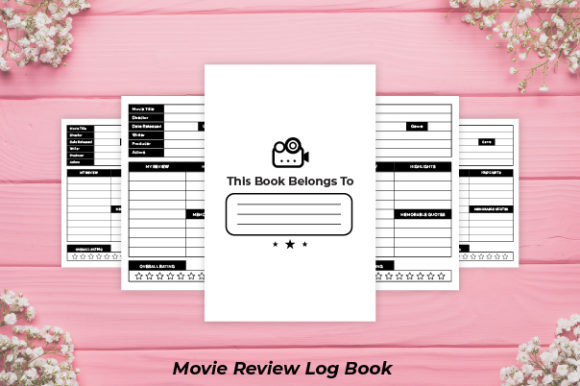
Opening Movie Review Log Book – KDP Interiors feels like flipping through a well-loved film journal—thoughtful, tactile, and quietly confident. The design leans into cinematic warmth with soft contrast, balanced negative space, and intentional typographic rhythm. It doesn’t scream for attention; it invites curiosity. For brand owners launching a lifestyle blog, a film-themed coaching program, or a curated digital product bundle, this graphic design asset lands as approachable yet polished—ideal for audiences who value authenticity over flash. It reads as handmade but professional, editorial but accessible—perfect for small business branding that prioritizes emotional connection over sterile perfection.
A Real-World Use Case: Building a Themed Content Kit for Film-Literate Entrepreneurs
Last month, I helped a creative entrepreneur launch a 30-day “Cinematic Mindset” challenge—a digital course blending storytelling frameworks with personal branding strategy. We needed cohesive, on-brand visuals across email banners, Instagram carousels, Pinterest pins, and printable reflection worksheets. Movie Review Log Book – KDP Interiors became the anchor: its clean logbook aesthetic unified the entire campaign without requiring custom illustration. We dropped the SVG files into Canva templates, layered them behind bold sans-serif headlines, and used the PNG variants as subtle background textures in email headers. The result? A visual identity that felt intentional—not pieced together—and resonated deeply with our audience of coaches, writers, and content creators who see storytelling as strategic leverage.
Where It Strengthens Brand Identity (and Where It Doesn’t)
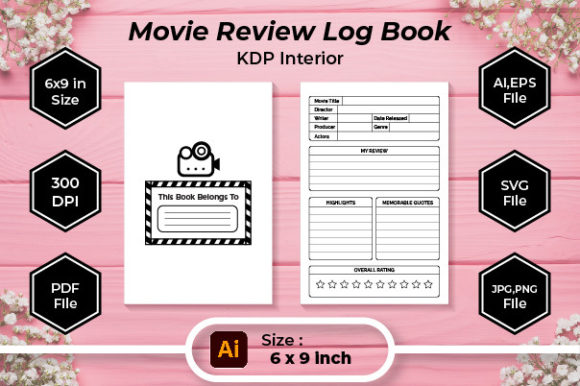
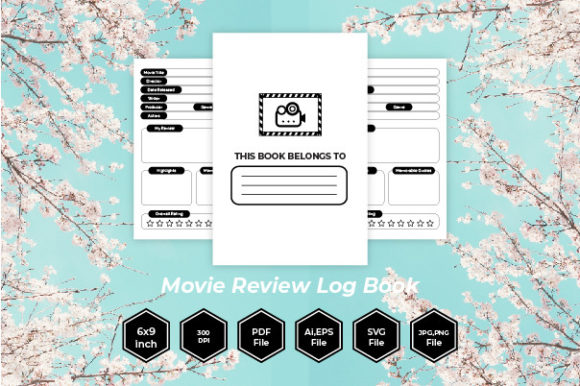
This graphic design asset shines brightest in contexts where tone matters more than technical precision: social media graphics that need warmth, editorial design for newsletters or blogs, lead magnets like printable review sheets, and branded templates for community-driven content. Its vector-based flexibility (AI, EPS, SVG) means it scales flawlessly—from Instagram story headers to A4 printable promotions. As a digital product, it supports stronger first impression and clearer visual hierarchy by offering instant structure: lined pages, subtle filmstrip motifs, and margin-conscious layouts guide the eye without competing with copy.
It also builds audience trust. Unlike generic clipart, Movie Review Log Book – KDP Interiors carries quiet authority—it signals care in curation, not just convenience. That perception transfers directly to your brand. Used consistently across packaging inserts, digital ads, or merchandise accents, it reinforces recognition and makes campaign visuals more memorable.
Smart Placement: Hero Graphics, Branded Templates, and Decorative Accents
For maximum impact, deploy this design asset where mood sets the stage: hero graphics for landing pages, campaign headers in email sequences, branded templates for client workbooks, social media cover photos with overlaid text, packaging accents on physical journals or subscription boxes, and decorative elements in editorial layouts. Its dual PNG and SVG formats make it ideal for both web design and print-ready applications—whether you’re building a Canva template library or prepping assets for KDP interiors.
Cautious Use: When Simplicity or Clarity Must Lead
Reserve caution when applying Movie Review Log Book – KDP Interiors to formal corporate branding, dense information layouts (like comparison charts), or mobile-first ads where tiny details vanish. Avoid pairing it with low-contrast backgrounds—it needs breathing room to retain legibility. It’s less effective in text-heavy Facebook ads or minimalist brands built on stark monochrome, since its charm lies in gentle texture and narrative suggestion—not austerity.
Brand Designer Notes You’ll Actually Use
- Test it with your brand color palette: Swap the default tones for your primary accent colors—especially in editable AI and SVG files—to lock in cohesion.
- Check black-and-white usage: Print a sample page. Does the line weight hold up at 70% scale? Does the filmstrip motif remain legible?
- Place it inside real campaign mockups: Drop it into a Mailchimp header, an Instagram post frame, and a PDF workbook preview—see how it behaves contextually.
- Preview on mobile screens: Zoom out. Does spacing collapse? Does typography still guide the eye—or get lost?
- Compare against competitor visuals: Does it stand out in a feed full of stock photography and gradient overlays? Or does it blend in too quietly?
- Pair it with fonts deliberately: It harmonizes beautifully with friendly sans-serifs (like Inter or Poppins), adds contrast beside elegant serifs (Lora, Playfair), and grounds playful script fonts without overwhelming them.
- Review spacing and balance: The original layout leaves generous margins—leverage that for your own content hierarchy instead of cramming.
- Confirm commercial licensing: This is a commercial design asset—verify usage rights before deploying in paid campaigns, client deliverables, or any small business branding system.
Why It Fits Creative Marketplaces—and Why It Stands Out
In the crowded creative marketplace, most KDP interiors lean either hyper-minimal or overly ornate. Movie Review Log Book – KDP Interiors occupies a rare middle ground: modern design with soul, professional branding with personality. It’s not just a printable design—it’s a storytelling scaffold. Whether you’re designing packaging for a boutique film podcast, creating Pinterest graphics for a book-to-film reading club, or building a media kit for a freelance critic, this asset gives your visual communication depth, consistency, and quiet confidence.
Final Thought: A Strategic Asset, Not Just a Pretty File
Don’t underestimate how much visual cohesion accelerates trust. Movie Review Log Book – KDP Interiors isn’t just another SVG design or PNG clipart—it’s a ready-made piece of your brand’s visual vocabulary. When used intentionally—with attention to tone, scale, and context—it transforms from background decoration into a subtle but powerful signal: You’ve thought this through. You care about the experience—not just the output. For marketers, designers, and creative entrepreneurs building real businesses, that’s not just good design. It’s good business.